
Trainable Spline Networks for Stable Image Reconstruction
About this Topic:
The two dominant CNN-based paradigms for consistent biomedical image reconstruction are (i) approaches based on trainable regularizers and (ii) proximal-gradient-type architectures, such as plug-and-play (PnP) methods, that rely on a learned denoiser. To ensure stability, these approaches require constraints—either by imposing (weak) convexity on the regularizer or by enforcing that the trained denoiser in PnP be 1-Lipschitz—which severely limits the expressivity of such systems.
The presenter will show that this limitation can be alleviated by making the neuronal activation functions themselves trainable, while enforcing appropriate slope constraints. This is achieved by penalizing the second-order total variation of each activation, which results in adaptive linear spline solutions. He will then show how the deep spline framework enables the efficient training of such systems. The effectiveness of the proposed approach is illustrated through denoising and biomedical image reconstruction experiments, where we report promising results.
About the Presenter:
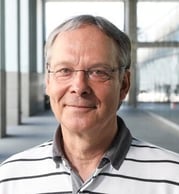
Michael Unser (M’89–SM’94–F’99–LF’23) received the M.S. and the Ph.D. degrees in electrical engineering from EPFL - Swiss Federal Technology Institute of Lausanne, Lausanne, Switzerland, in 1981 and 1984, respectively.
He is currently a full Professor with EPFL’s school of Engineering and the academic director of EPFL's Center for Imaging, Lausanne, Switzerland. From 1985 to 1997, he was with the Biomedical Engineering and Instrumentation Program, National Institutes of Health, Bethesda USA, conducting research on bioimaging. His primary areas of investigation are signal processing, biomedical imaging and applied functional analysis.
Dr. Unser is internationally recognized for his research contributions to sampling theory, wavelets, the use of splines for image processing, stochastic processes, and computational bioimaging. He has published over 400 journal papers on those topics. He is the author with P. Tafti of the book “An introduction to sparse stochastic processes”, Cambridge University Press 2014. He has served on the editorial board of most of the primary journals in his field including the IEEE Transactions on Medical Imaging (associate Editor-in-Chief 2003-2005), IEEE Transactions on Image Processing, Proc. of IEEE, and SIAM J. of Imaging Sciences. He co-organized the first IEEE International Symposium on Biomedical Imaging (ISBI2002) and was the founding chair of the technical committee of the IEEE-SP Society on Bio Imaging and Signal Processing (BISP). Dr. Unser is a fellow of the IEEE (1999), an EURASIP fellow (2009), and a member of the Swiss Academy of Engineering Sciences. He is the recipient of several international prizes including five IEEE-SPS Best Paper Awards, two Technical Achievement Awards from the IEEE (2008 SPS and EMBS 2010), the 2018 Technical Achievement Award from EURASIP, the 2020 Career Achievement Award from the IEEE Society on Engineering in Medicine and Biology (EMBS), and the 2025 IEEE SPS Norbert Wiener Society Award. He was awarded three ERC AdG grants: FUNSP (2011-2016), GlobalBioIm (2016-2021), and FunLearn (2021-2026).
Want to learn more about upcoming events & webinars?
Visit the events section of the Signal Processing website to see all upcoming lectures, workshops, webinars, and more.